
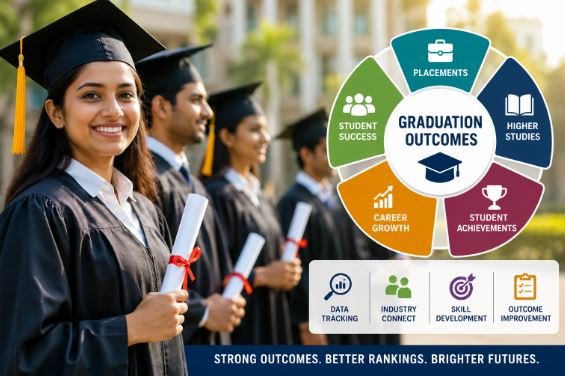
Graduation outcomes NIRF is one of the most influential parameters in the National Institutional Ranking Framework (NIRF). For colleges and universities aiming to improve their rankings, strong graduation outcomes reflect the institution’s ability to produce successful graduates who secure employment, pursue higher education, or achieve significant professional milestones.
Many institutions focus heavily on research, infrastructure, and academic processes while underestimating the importance of placement data, higher studies progression, and student outcomes. However, graduation outcomes directly impact institutional reputation and ranking performance. This guide explains how the parameter is evaluated, why it matters, common challenges institutions face, and practical strategies for improvement.
1. Understanding Graduation Outcomes in NIRF
Graduation Outcomes (GO) is a major parameter within the NIRF methodology that measures the success of students after completing their academic programs.
The parameter evaluates whether institutions are effectively preparing students for:
- Employment opportunities
- Higher education progression
- Competitive examinations
- Entrepreneurship
- Professional achievements
Strong graduation outcomes demonstrate that educational processes translate into meaningful student success.
What Graduation Outcomes Measure
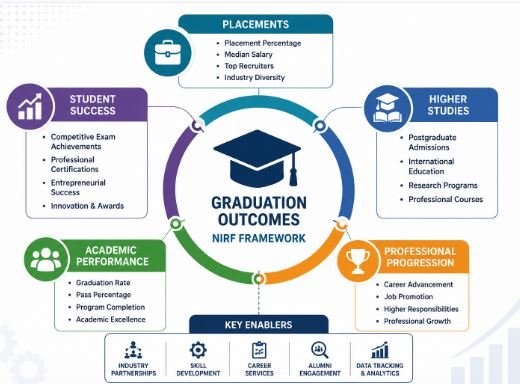
| Area | Focus |
|---|---|
| Placements | Employment opportunities secured |
| Higher Studies | Admission to postgraduate programs |
| Academic Performance | Examination success |
| Professional Progression | Career advancement indicators |
| Student Achievement | Competitive and professional success |
2. Why Graduation Outcomes Matter for Rankings
Better NIRF Performance
Graduation Outcomes contributes significantly to overall ranking scores.
Institutions with strong performance in:
- Placements
- Higher education admissions
- Student achievements
often achieve stronger ranking positions.
Demonstrates Educational Effectiveness
Graduation outcomes show whether students successfully apply the knowledge and skills gained during their studies.
Improves Institutional Reputation
Prospective students and parents increasingly evaluate colleges based on graduate success metrics.
Strengthens Industry Confidence
Employers prefer institutions that consistently produce skilled graduates ready for workplace challenges.
Supports Accreditation and Quality Assurance
Student outcomes are also important for:
- NAAC assessments
- NBA accreditation
- Academic audits
- Quality assurance reviews
3. Key Components of the Graduation Outcomes Parameter
1. Placement Performance
Placement performance remains one of the most visible indicators of institutional effectiveness.
Important measures include:
- Placement percentage
- Median salary
- Industry diversity
- Internship conversion rates
Accurate placement data collection is essential for reporting.
2. Higher Studies Progression
NIRF recognizes graduates pursuing:
- Master’s degrees
- Doctoral programs
- Professional certifications
- International education opportunities
Institutions should maintain robust tracking systems for students continuing their education.
3. Student Achievement and Progression
Student outcomes may also include:
- Competitive examination success
- Professional certifications
- Entrepreneurship initiatives
- Innovation achievements
4. Examination and Completion Performance
Institutions should monitor:
- Graduation rates
- Academic success rates
- Program completion timelines
These indicators reflect academic effectiveness and student support systems.
4. How Institutions Can Improve Graduation Outcomes
Step 1: Strengthen Placement Ecosystems
Develop structured placement strategies including:
- Industry partnerships
- Career counseling
- Skill development programs
- Internship opportunities
Step 2: Improve Employability Skills
Students should receive training in:
- Communication skills
- Technical competencies
- Problem-solving
- Leadership development
Step 3: Establish Higher Studies Support Systems
Institutions can support higher studies by providing:
- Entrance exam coaching
- Research mentoring
- Faculty guidance
- Application assistance
Step 4: Create Graduate Tracking Mechanisms
Reliable data collection is critical.
Track:
- Employment status
- Salary packages
- Higher education admissions
- Professional certifications
Step 5: Use Data Analytics
Analyze trends in:
- Placement performance
- Graduate progression
- Industry demand
- Student achievements
Data-driven interventions improve outcomes over time.
Step 6: Engage Alumni Networks
Alumni contribute through:
- Mentorship
- Recruitment opportunities
- Industry connections
- Career guidance
Step 7: Align Curriculum with Industry Needs
Regular curriculum reviews help institutions ensure graduates possess relevant skills.
5. Common Mistakes Institutions Should Avoid
Inaccurate Placement Data
One of the most common issues is incomplete or poorly maintained placement records.
Weak Graduate Tracking Systems
Many institutions lose contact with graduates after completion, making data collection difficult.
Lack of Documentation
Missing evidence can affect data verification and reporting accuracy.
Limited Industry Collaboration
Insufficient employer engagement often impacts placement opportunities.
Ignoring Higher Studies Data
Many institutions focus only on placements while underreporting students pursuing postgraduate education.
Reactive Rather Than Strategic Planning
Waiting until ranking submission periods often leads to data gaps and reporting challenges.
6. Best Practices for Improving Graduation Outcomes
1. Establish Dedicated Outcome Monitoring Teams
Assign responsibility for collecting and validating student outcome data.
2. Conduct Annual Outcome Audits
Regular audits help verify:
- Placement records
- Higher studies progression
- Student achievement data
3. Maintain Centralized Data Systems
Use digital systems to store and update outcome-related information.
4. Strengthen Career Services
Career development cells should work throughout the academic year.
5. Improve Industry Engagement
Focus on:
- Recruitment drives
- Industry projects
- Guest lectures
- Internship opportunities
6. Track Alumni Success
Alumni achievements can provide valuable indicators of institutional impact.
Graduation Outcomes Checklist
1. Placement data verified
2. Higher studies records updated
3. Alumni tracking system active
4. Student achievements documented
5. Industry partnerships established
6. Career guidance programs implemented
7. Data validation processes completed
8. Annual outcome audit conducted

7. How Bhavya Gyan Consultants (BGC) Can Help
Bhavya Gyan Consultants assists colleges and universities in strengthening their NIRF readiness through structured data management and performance improvement strategies.
BGC Support Services
- NIRF Ranking Readiness Assessment
- Graduation Outcomes Audit
- Placement Data Verification
- Student Outcome Documentation Support
- Higher Studies Tracking Framework
- Academic Audit Services
- IQAC Strengthening Support
- Data Validation and Reporting
- Institutional Benchmarking
Our team helps institutions identify performance gaps and implement sustainable improvement initiatives aligned with NIRF requirements.
Official External Links:
National Institutional Ranking Framework (NIRF)
University Grants Commission (UGC)
FAQs:
Graduation outcomes measure student success after completing academic programs, including placements, higher studies, and professional achievements.
They demonstrate institutional effectiveness and significantly influence overall ranking performance.
By strengthening placements, supporting higher studies, enhancing employability skills, and maintaining accurate outcome data.
Placement records, salary information, higher studies admissions, certifications, competitive examination results, and alumni achievements.
Institutions should conduct annual audits and periodic reviews throughout the year.



3 thoughts on “Graduation Outcomes NIRF Ranking: How Institutions Can Improve Performance”