

Institutional excellence has become a critical objective for colleges and universities operating in an increasingly competitive higher education environment. Regulatory expectations, accreditation requirements, stakeholder satisfaction, research performance, student outcomes, and ranking frameworks all demand a structured approach toward continuous improvement.
For principals, directors, IQAC coordinators, department heads, and accreditation teams, achieving institutional excellence is not about a single initiative. It is the result of strategic planning, quality-focused governance, data-driven decision-making, academic innovation, and effective stakeholder engagement.
This guide explores practical frameworks, proven strategies, and actionable recommendations that institutions can adopt to strengthen performance, improve quality systems, and build a sustainable culture of excellence.
Request Expert Consultation for Institutional Excellence Improvement Today
1. Understanding Institutional Excellence
Institutional excellence refers to the ability of an educational institution to consistently achieve high standards across academic, administrative, research, governance, and student-support functions.
It involves:
- Effective leadership and governance
- Quality teaching-learning processes
- Strong research and innovation culture
- Robust documentation systems
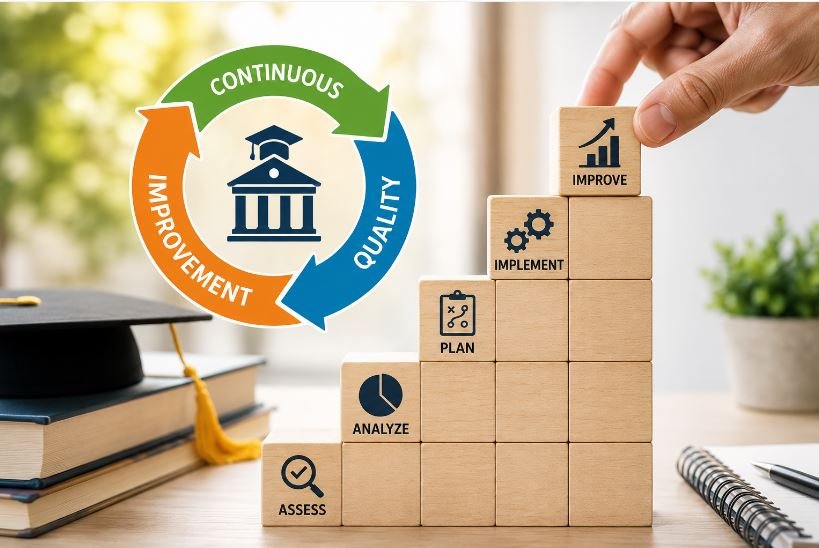
- Continuous quality improvement
- Stakeholder satisfaction
- Regulatory compliance
- Strategic institutional growth

Institutional excellence is not limited to accreditation outcomes. It reflects the overall capability of an institution to deliver meaningful educational value while continuously improving its systems and processes.
Key Dimensions of Institutional Excellence
| Dimension | Focus Area |
|---|---|
| Governance | Leadership, planning, policy implementation |
| Academics | Curriculum, pedagogy, learning outcomes |
| Research | Publications, innovation, grants |
| Student Development | Employability, support services, mentoring |
| Infrastructure | Learning resources and facilities |
| Quality Assurance | IQAC systems and improvement mechanisms |
| Community Engagement | Extension activities and social impact |
2. Why Institutional Excellence Matters for Colleges and Universities
Better Accreditation Outcomes
Frameworks such as NAAC, NBA, and autonomous status assessments emphasize evidence-based quality systems and continuous improvement practices.
Institutions that focus on excellence throughout the year are better prepared during accreditation cycles.
Improved Student Success
Strong academic systems contribute to:
- Higher student retention
- Better academic performance
- Improved placements
- Enhanced employability
- Increased student satisfaction
Stronger Institutional Reputation
Institutions recognized for excellence often experience:
- Increased admissions
- Better industry partnerships
- Enhanced alumni engagement
- Improved employer trust
Better Ranking Performance
Many ranking frameworks evaluate indicators related to:
- Research productivity
- Governance effectiveness
- Student outcomes
- Outreach initiatives
- Institutional perception
A structured quality improvement strategy directly supports ranking readiness.
Enhanced Stakeholder Confidence
Faculty members, students, parents, recruiters, and regulators gain confidence when institutions demonstrate transparency, accountability, and measurable progress.
Download Institutional Excellence Checklist for Strategic Growth
3. Step-by-Step Framework for Achieving Institutional Excellence
Step 1: Establish a Clear Institutional Vision
Institutional excellence begins with a clearly defined vision and mission.
Leadership teams should ensure that:
- Strategic goals are measurable
- Objectives align with national education priorities
- Stakeholders understand institutional direction
Step 2: Strengthen Governance Systems
Effective governance creates accountability and ensures smooth implementation of institutional plans.
Key actions include:
- Regular governing body meetings
- Policy reviews
- Strategic planning exercises
- Performance monitoring mechanisms
Step 3: Empower the IQAC
The Internal Quality Assurance Cell plays a central role in driving quality initiatives.
IQAC should focus on:
- Academic audits
- Quality benchmarks
- Data collection systems
- Best practice documentation
- Annual quality reports
Step 4: Improve Academic Processes
Academic excellence remains a core component of institutional excellence.
Recommended initiatives:
- Outcome-based education implementation
- Curriculum enrichment
- Faculty development programs
- Innovative teaching methods
- Continuous assessment improvement
Step 5: Build a Research and Innovation Culture
Research excellence strengthens institutional credibility.
Strategies include:
- Research mentorship programs
- Publication support mechanisms
- Industry collaboration projects
- Innovation and incubation activities
- Research grant facilitation
Step 6: Implement Data-Driven Decision Making
Institutions should collect and analyze performance indicators regularly.
Examples include:
- Enrollment trends
- Examination performance
- Placement statistics
- Research outputs
- Student feedback
Reliable data helps leadership identify strengths and areas requiring intervention.
Step 7: Promote Continuous Quality Improvement
Quality improvement should become an ongoing institutional habit.
Use:
- Periodic audits
- Department reviews
- Stakeholder feedback
- Action Taken Reports (ATRs)
- Benchmarking exercises

4. Common Mistakes Institutions Should Avoid
Many institutions struggle to sustain quality initiatives because of avoidable mistakes.
Treating Quality as an Accreditation Activity
Quality should be embedded in everyday operations rather than activated only during accreditation visits.
Weak Documentation Practices
Lack of evidence often prevents institutions from demonstrating achievements effectively.
Common issues include:
- Missing records
- Inconsistent data
- Unorganized files
- Incomplete reports
Limited Faculty Participation
Institutional excellence requires active faculty involvement across departments.
Without faculty engagement:
- Quality initiatives become isolated
- Innovation decreases
- Improvement efforts lose momentum
Poor Data Management
Decisions based on assumptions rather than evidence can lead to ineffective interventions.
Absence of Follow-Up Mechanisms
Improvement initiatives should include monitoring and review systems.
Without follow-up:
- Action plans remain incomplete
- Quality goals are not achieved
- Institutional learning is reduced
5. Best Practices for Sustainable Institutional Excellence
1. Develop a Quality Culture
Create an environment where quality becomes everyone’s responsibility.
Encourage:
- Ownership
- Accountability
- Collaboration
- Innovation
2. Conduct Regular Academic Audits
Periodic reviews help departments identify gaps and opportunities for enhancement.
Audit areas may include:
- Curriculum delivery
- Assessment practices
- Learning outcomes
- Student support systems
3. Use Benchmarking Effectively
Compare institutional performance with:
- Peer institutions
- Accreditation standards
- National benchmarks
Benchmarking supports informed quality improvement initiatives.
4. Invest in Faculty Development
Faculty members are key drivers of institutional growth.
Recommended activities:
- FDPs
- Research workshops
- Technology training
- Leadership programs
5. Strengthen Stakeholder Engagement
Collect structured feedback from:
- Students
- Faculty
- Alumni
- Employers
- Community partners
Feedback provides valuable insights for quality enhancement.
6. Integrate Technology into Quality Systems
Technology can improve:
- Documentation
- Data management
- Communication
- Monitoring processes
Digital systems increase efficiency and transparency.
7. Create Annual Quality Improvement Plans
A documented roadmap ensures continuous progress.
Include:
- Objectives
- Timelines
- Responsibility allocation
- Success indicators
Institutional Excellence Checklist
1. Strategic plan updated
2. IQAC functioning effectively
3. Academic audits conducted
4. Research promotion initiatives active
5. Stakeholder feedback analyzed
6. Data management system established
7. Faculty development programs implemented
8. Quality improvement plans monitored
6. How Bhavya Gyan Consultants (BGC) Can Help
Achieving institutional excellence requires systematic planning, implementation, monitoring, and documentation.
Bhavya Gyan Consultants supports higher education institutions through specialized services designed to strengthen quality systems and accreditation readiness.
BGC Support Areas
- NAAC Accreditation Consultancy
- NBA & Outcome-Based Education Support
- IQAC Strengthening Services
- Academic Audit Framework Development
- NIRF Ranking Readiness Support
- Documentation and Evidence Management
- Institutional Strategic Planning
- Website Structuring for Accreditation Compliance
- Quality Improvement Framework Design
Through structured assessments and consultative guidance, BGC helps institutions identify improvement opportunities and develop sustainable quality systems aligned with institutional goals.
Enhance Institutional Excellence Through Expert Guidance Today
Official External Resources
- UGC Guidelines
- NAAC Quality Assurance Resources
- NIRF Official Framework
FAQs:
Institutional excellence refers to the consistent achievement of high standards across academics, governance, research, student services, and quality assurance systems.
Strong quality systems, documentation practices, governance structures, and continuous improvement processes contribute significantly to accreditation readiness and performance.
IQAC acts as the central quality assurance mechanism that coordinates planning, monitoring, documentation, audits, and continuous improvement initiatives.
Colleges can improve through strategic planning, faculty development, academic audits, stakeholder engagement, research promotion, and data-driven decision-making.
Continuous quality improvement helps institutions adapt to changing educational expectations, enhance performance, and sustain long-term growth.
Related posts:
NAAC 2025–26: The Complete Guide for Indian Colleges — Binary Accreditation, MBGL, Transition Rules ...

How to Streamline Your Institutional Workflow for NAAC Accreditation
How to Build Continuous Quality Improvement in Colleges

1 thought on “Institutional Excellence: Best Practices for Higher Education Institutions”