

Most colleges make the same early mistake: they open the NAAC portal before they have actually organised themselves to use it well. Strong NAAC preparation starts long before IIQA registration, with planning, ownership, and an honest look at where your institution currently stands. This guide covers exactly that groundwork. For the detailed, stage-by-stage portal process once you are ready to register, our partner guide on the complete NAAC accreditation journey walks through Registration, IIQA, SSR, DVV, and the peer team visit in full detail.
This guide focuses on the phase before all of that: getting your institution organised, realistic, and genuinely ready, so the portal stages that follow go smoothly instead of becoming a scramble.
🚀 Ready to build a structured, realistic NAAC preparation plan for your institution? Talk to a BGC NAAC Consultant today.
Why Institutions Rush This Phase, and Why It Backfires
Many colleges treat NAAC preparation as something that begins the day someone opens the portal and starts filling in IIQA fields. In practice, that is closer to the middle of the process than the beginning. Institutions that skip straight to portal activity usually discover, weeks or months in, that their IQAC lacks real authority, their evidence is scattered across departments in inconsistent formats, and no one has actually looked closely at where the institution stands against NAAC’s criteria.
Fixing these gaps under deadline pressure is far harder than addressing them at the start. A few weeks spent on groundwork before touching the portal consistently saves months of correction later.

Step 1: Confirm Your Institution Is Eligible to Apply
Before any planning begins, confirm your institution actually meets NAAC’s eligibility criteria. An institution generally qualifies once it has been in existence for a set minimum number of years, or once at least two batches of students have graduated, whichever comes first. Confirm your exact status against the current NAAC manual for your institution type before setting a timeline, since eligibility rules are occasionally revised.
Step 2: Form or Strengthen Your IQAC
Your Internal Quality Assurance Cell is the engine behind the entire accreditation process, not a formality created just before submission. If your IQAC does not already exist in a functioning form, this is the first real task.
- Appoint an IQAC coordinator with the authority to request data across every department
- Include representation from academics, administration, and student affairs, not just senior faculty
- Give the IQAC a standing meeting schedule, not just ad hoc meetings before deadlines
- Document IQAC decisions and actions from day one, since this record itself becomes evidence later
🏛️ Need help setting up or strengthening your IQAC structure? Talk to a BGC NAAC Consultant.
Step 3: Run an Internal NAAC Readiness Audit
Before committing to a timeline, get an honest picture of your NAAC readiness across every criterion. Institutions that skip this step tend to discover major gaps midway through SSR drafting, when there is far less time to fix them. A readiness audit does not need to be elaborate to be useful; it simply needs to be honest.
- Score your institution informally against each of the seven criteria using the latest NAAC manual as a reference
- Identify criteria where five years of consistent evidence genuinely exists, versus criteria with major gaps
- Flag statutory approvals that are expired, pending renewal, or missing entirely
- Treat this audit as a diagnostic, not a formality; its purpose is to surface uncomfortable gaps early
Step 4: Build a Realistic NAAC Planning Timeline
Rushed NAAC planning is one of the most common reasons institutions underperform in their first cycle. A realistic timeline, built around your readiness audit findings rather than an arbitrary deadline, prevents this. Every institution’s timeline will look slightly different depending on how large the gaps identified in Step 3 turn out to be.
- Readiness audit and gap analysis: typically the first month of active preparation
- IQAC strengthening and policy alignment: running in parallel with the audit
- Department-wise evidence collection and digitisation: the longest phase, often several months
- SSR drafting and internal review: once evidence collection is substantially complete
- DVV response window: built into the timeline as a buffer, not an afterthought
- Peer team visit preparation: including a mock visit if time allows
📅 Want a realistic, institution-specific NAAC preparation timeline? Book a Free NAAC Readiness Consultation.
Step 5: Assign Ownership Across Departments
A readiness audit and a timeline mean little without clear ownership. Every department needs to know exactly what is expected of them and by when.
- Assign one nodal officer per department, responsible for that department’s evidence and data accuracy
- Set fixed monthly check-ins rather than one large request close to the deadline
- Make evidence submission part of each department’s regular reporting, not a special accreditation-only task
- Keep a single tracking sheet visible to the IQAC showing which departments are on schedule
Step 6: Set Up Your Documentation System Early
Strong accreditation preparation depends on a documentation system built before evidence starts arriving, not one improvised afterward. Our guide on how to prepare evidence for DVV covers this in detail, including folder structure, formatting rules, and cross-verification. If you would rather have this structure built for you, our Criteria-wise Documentation Support service sets it up from the start.

Step 7: Start Data Collection and Digitisation Immediately
Once ownership and structure are in place, begin collecting and digitising evidence right away, even for criteria you will not draft SSR content for until later. NAAC evidence spans a rolling five-year window, so the earlier digitisation starts, the less reconstruction work remains later.
- Digitise attendance registers, circulars, and committee minutes as they are generated going forward
- Back-fill older records gradually, starting with the criteria your readiness audit flagged as weakest
- Store everything in the metric-mapped structure decided in Step 6, not in ad hoc department folders
📂 Ready to move from planning into structured SSR preparation? Get SSR Preparation Support from BGC.
Plan Your Budget and Resources Early
NAAC preparation has real costs beyond the registration fee: consultancy support if you choose to use it, staff time diverted from regular duties, infrastructure upgrades flagged during the readiness audit, and occasionally software for evidence management. Institutions that budget for these early avoid mid-cycle funding delays that stall preparation right when momentum matters most.
- Estimate staff time realistically, since evidence collection pulls people away from regular administrative work
- Budget for any infrastructure gaps identified during the readiness audit, rather than treating them as a later surprise
- Decide early whether to bring in external consultancy support, since this affects both cost and timeline
- Set aside contingency time and budget for the DVV clarification stage, which often arrives with short response windows
Common First-Time Mistakes to Avoid
A handful of avoidable mistakes account for most of the difficulty institutions face in their first accreditation cycle. Reviewing this list before you start is far easier than fixing these issues once preparation is already underway.
- Registering on the NAAC portal before the IQAC and documentation system are actually functional
- Treating the readiness audit as a formality instead of an honest diagnostic
- Assigning evidence collection to departments without clear deadlines or a tracking system
- Starting SSR drafting before evidence collection is substantially complete
For a fuller list of pitfalls institutions run into during the process itself, our guide on top mistakes colleges make during NAAC assessment is worth reading alongside this one.
Conclusion
Strong NAAC preparation is decided in the first few weeks, long before anyone touches the SSR draft. Confirm eligibility, build a functioning IQAC, run an honest readiness audit, set a realistic timeline and budget, and put ownership and documentation systems in place before evidence starts flowing in. Institutions that get this groundwork right consistently move through IIQA, SSR, and DVV with far less last-minute pressure than those that start preparation only once the portal is open.
Once your groundwork is in place, the next stage is the SSR itself. Our guide on how to write strong SSR responses is the natural next step from here.
FAQs
As early as possible, ideally 9 to 18 months before planned submission.
Confirming eligibility and forming a functioning IQAC.
It reveals evidence gaps early, while there is still time to fix them.
Most institutions need 9 to 18 months for a well-organised first cycle.
The IQAC, supported by department-level nodal officers.
External Resources
- NAAC Official Website
- NAAC Manuals and SSR Formats (Assessment & Accreditation)
- NAAC Accreditation 2026: Complete Step-by-Step Guide — Mantech Publications
Related posts:

How to Write Strong SSR Responses: A Practical Guide for NAAC Accreditation
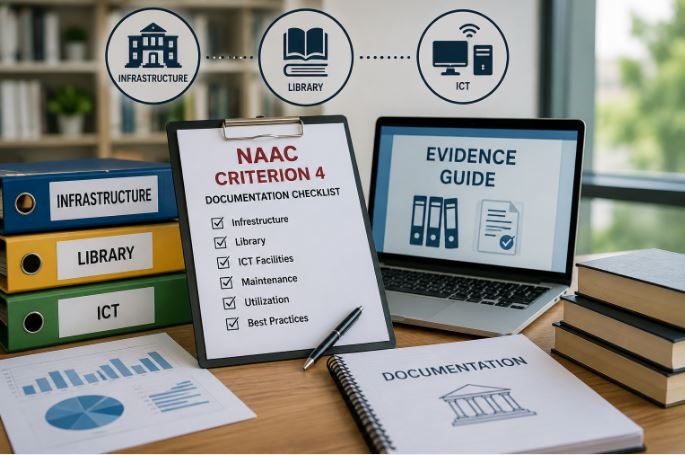
NAAC Criterion 4 Documentation Checklist: Infrastructure, Library, and ICT Evidence Guide
How to Prepare Evidence for DVV: A Practical Guide for NAAC Submissions
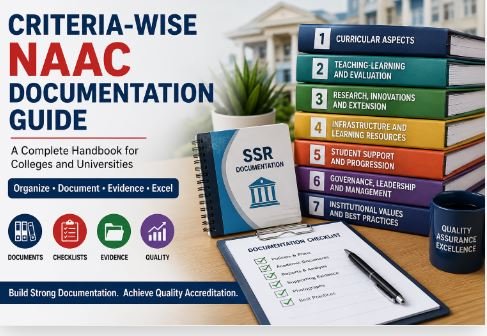
6 thoughts on “How to Start NAAC Preparation in a College: A Step-by-Step Readiness Guide”