

In today’s rapidly evolving higher education environment, quality assurance has become a strategic necessity rather than merely an accreditation requirement. Colleges and universities across India are increasingly focusing on strengthening their Internal Quality Assurance Cell (IQAC) to improve institutional performance, enhance stakeholder satisfaction, and achieve better outcomes during accreditation assessments.
Among all quality-related mechanisms within higher education institutions, IQAC plays the most significant role in ensuring continuous improvement. Whether an institution is preparing for its first accreditation cycle or aiming to improve its existing grade, implementing effective IQAC best practices can significantly enhance readiness and long-term institutional growth.
Many institutions, however, treat IQAC activities as periodic tasks carried out only when accreditation approaches. This reactive approach often results in incomplete documentation, inconsistent quality processes, weak evidence collection, and limited stakeholder participation. A proactive IQAC system helps institutions avoid these challenges by embedding quality assurance into daily academic and administrative operations.
This comprehensive guide explains the most effective IQAC best practices that colleges can adopt to strengthen accreditation readiness, improve governance, enhance institutional performance, and support sustainable quality enhancement.
1. Understanding IQAC and Its Role in Higher Education
The Internal Quality Assurance Cell (IQAC) serves as the central quality monitoring and improvement mechanism within higher education institutions. Established as a quality sustenance measure, IQAC promotes continuous institutional development rather than short-term accreditation preparation.
The primary objective of IQAC is to create a quality-focused culture across academic and administrative functions.
Key Responsibilities of IQAC
- Developing quality benchmarks
- Monitoring academic performance
- Conducting internal audits
- Facilitating stakeholder feedback
- Maintaining accreditation documentation
- Supporting strategic planning
- Promoting innovation and best practices
- Tracking institutional performance indicators
An effective IQAC functions throughout the year and contributes significantly to institutional improvement beyond accreditation requirements.
2. Why IQAC Best Practices Matter for NAAC Preparation
NAAC assessment emphasizes evidence-based quality processes and institutional effectiveness. Institutions with strong IQAC systems generally demonstrate better preparedness across all accreditation criteria.
Benefits of Implementing IQAC Best Practices
1. Continuous Quality Monitoring
Regular monitoring prevents quality issues from accumulating before accreditation cycles.
2. Improved Documentation Readiness
Systematic documentation reduces last-minute stress during assessment.
3. Better Stakeholder Participation
Faculty, students, alumni, employers, and administrators contribute actively to institutional improvement.
4. Enhanced Governance
Decision-making becomes data-driven and evidence-based.
5. Sustainable Quality Culture
Quality assurance becomes an ongoing institutional practice rather than a compliance exercise.
6. Stronger Accreditation Performance
Consistent implementation of quality measures improves institutional outcomes during evaluation.

3. Essential IQAC Best Practices Every College Should Implement
Practice 1: Develop Annual Quality Assurance Plans
IQAC should establish measurable annual objectives aligned with institutional vision and strategic priorities.
Include:
- Academic quality targets
- Research goals
- Faculty development plans
- Student support initiatives
- Community engagement objectives
Practice 2: Conduct Regular Internal Academic Audits
Internal audits help institutions evaluate performance before external assessments.
Audit Areas:
- Teaching-learning processes
- Curriculum implementation
- Student outcomes
- Research productivity
- Infrastructure utilization
Practice 3: Create Department Quality Dashboards
Departments should maintain quality indicators such as:
- Pass percentages
- Placement statistics
- Publication counts
- Student satisfaction scores
- Faculty development activities
Practice 4: Implement Structured Feedback Systems
Collect feedback from:
- Students
- Faculty
- Alumni
- Employers
- Parents
Analyze trends and develop corrective actions.
Practice 5: Establish Documentation Standards
Create uniform formats for:
- Reports
- Meeting minutes
- Event documentation
- Academic records
- Committee proceedings
Practice 6: Monitor Key Performance Indicators (KPIs)
Track:
- Research output
- Student progression
- Faculty qualifications
- Placement performance
- Extension activities
4. IQAC Documentation and Evidence Management Framework
Documentation remains one of the biggest challenges during accreditation.
Essential Documentation Categories
Academic Records
- Lesson plans
- Attendance records
- Examination reports
- Curriculum revision documents
Research Records
- Publications
- Patents
- Research projects
- Consultancy activities
Student Support Records
- Scholarships
- Placements
- Internships
- Student progression
Governance Records
- IQAC minutes
- Strategic plans
- Policy documents
- Annual reports
Documentation Best Practices
- Maintain digital repositories
- Use standardized naming conventions
- Ensure periodic backups
- Organize criterion-wise evidence
- Conduct quarterly verification
5. Stakeholder Engagement Strategies for Quality Enhancement
Quality improvement requires participation from all stakeholders.
Students
- Feedback systems
- Quality circles
- Representation in committees
Faculty
- Quality workshops
- Research mentoring
- Development programs
Alumni
- Curriculum feedback
- Industry networking
- Mentorship initiatives
Employers
- Skill gap analysis
- Placement support
- Curriculum recommendations
Community
- Outreach programs
- Extension activities
- Social impact projects
Effective stakeholder engagement strengthens institutional credibility and quality outcomes.
6. Data-Driven Decision Making Through IQAC
Modern IQAC systems rely heavily on institutional data.
Important Data Sources
- Academic performance reports
- Research databases
- Student satisfaction surveys
- Placement analytics
- Faculty productivity records
Benefits of Data Analytics
- Early identification of challenges
- Better resource allocation
- Improved strategic planning
- Enhanced accountability
- Stronger accreditation evidence
Request Expert IQAC Consultation for Accreditation Readiness Today
Institutions should establish regular data review mechanisms under IQAC supervision.
H2 7. Technology Integration in IQAC Processes
Technology significantly improves quality management efficiency.
Recommended Digital Tools
ERP Systems
Manage:
- Attendance
- Examinations
- Student records
Learning Management Systems
Support:
- Online learning
- Assessment tracking
- Academic monitoring
Digital Documentation Platforms
Enable:
- Centralized storage
- Easy retrieval
- Evidence mapping
Analytics Dashboards
Provide:
- KPI monitoring
- Quality indicators
- Performance tracking
Technology helps institutions maintain continuous readiness for accreditation.
8. Common Mistakes Institutions Should Avoid
Mistake 1: Treating IQAC as an Accreditation Office
IQAC should function continuously rather than during assessment periods only.
Mistake 2: Poor Documentation Management
Missing evidence weakens institutional performance.
Mistake 3: Lack of Stakeholder Participation
Quality initiatives become ineffective without engagement.
Mistake 4: Irregular Review Meetings
Periodic monitoring is essential.
Mistake 5: Weak Data Analysis
Collecting data without analysis provides limited value.
Mistake 6: Absence of Follow-Up Actions
Improvement recommendations must translate into implementation.
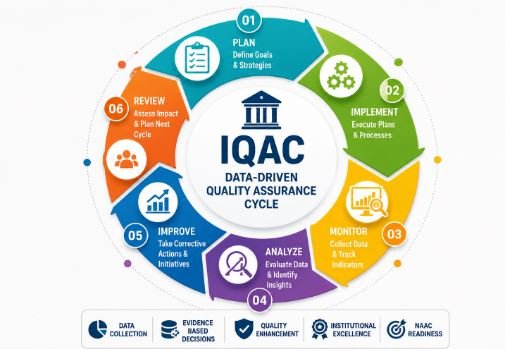
9. Roadmap for Building a High-Performance IQAC
1: Assessment
- Review current systems
- Conduct quality audit
- Identify gaps
2: Planning
- Define quality objectives
- Allocate responsibilities
- Develop timelines
3: Implementation
- Execute initiatives
- Monitor performance
- Engage stakeholders
4: Evaluation
- Measure outcomes
- Analyze indicators
- Review progress
5: Improvement
- Address gaps
- Update processes
- Enhance systems
This cycle should operate continuously throughout the academic year.
10. How Bhavya Gyan Consultants (BGC) Supports IQAC Excellence
Bhavya Gyan Consultants (BGC) assists colleges and universities in building effective quality assurance systems aligned with accreditation requirements.
Our Services Include
IQAC Establishment and Strengthening
NAAC Accreditation Consultancy
Documentation and Evidence Management
Academic and Administrative Audits
Institutional Quality Benchmarking
Strategic Planning Support
Faculty Development Programs
Accreditation Readiness Reviews
Why Institutions Choose BGC
- Practical implementation support
- Criterion-wise guidance
- Documentation expertise
- Audit-based improvement approach
- Capacity-building workshops
- Long-term quality enhancement focus
Our experts work closely with institutional leadership and IQAC teams to create sustainable quality systems that support both accreditation success and institutional growth.
Conclusion
Implementing effective IQAC best practices is essential for institutions seeking continuous improvement and stronger accreditation outcomes. A proactive IQAC not only supports NAAC preparation but also strengthens governance, documentation systems, stakeholder engagement, and overall institutional performance.
Institutions that invest in quality assurance throughout the year are better positioned to demonstrate excellence, respond to evolving educational challenges, and build a culture of accountability and innovation.
The most successful colleges view IQAC not as a compliance mechanism but as a strategic driver of institutional improvement and long-term sustainability.
FAQs:
IQAC best practices are structured quality assurance activities that help institutions continuously improve academic, administrative, and governance performance.
IQAC coordinates quality initiatives, maintains documentation, monitors performance, and supports continuous improvement required for accreditation.
Most institutions benefit from quarterly reviews along with annual quality audits.
IQAC should maintain meeting minutes, action taken reports, feedback analysis, audit reports, strategic plans, and accreditation-related evidence.
Technology supports documentation management, analytics, stakeholder feedback collection, and performance monitoring.
2 thoughts on “IQAC Best Practices for Colleges Preparing for NAAC”