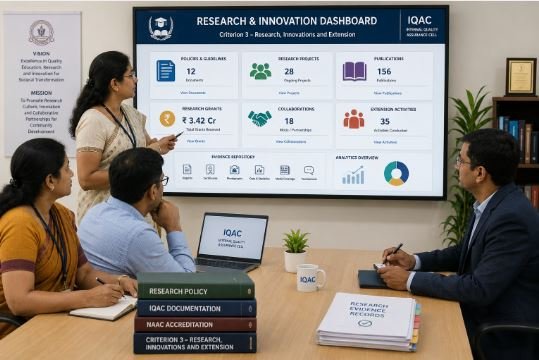
Research plays a crucial role in advancing knowledge, solving societal problems, fostering innovation, and enhancing the reputation of educational institutions. In today’s knowledge-driven economy, universities are expected not only to impart education but also to contribute significantly to research and development. High-quality research supports academic excellence, strengthens institutional rankings, improves accreditation outcomes, and contributes to national development.
India has made remarkable progress in higher education and research over the past few decades. The country is home to thousands of universities, colleges, research institutes, and millions of students pursuing higher studies. Government initiatives, research funding programs, innovation policies, and international collaborations have created new opportunities for researchers across disciplines.
Strengthen institutional research through expert strategic guidance.
Despite these developments, researchers in Indian universities continue to face numerous challenges that affect research productivity, publication quality, innovation outcomes, and global competitiveness. From funding constraints and administrative hurdles to infrastructure limitations and publication pressures, these challenges can significantly impact the research ecosystem.
This article explores the major challenges faced by researchers in Indian universities and discusses potential strategies for overcoming them.
Importance of Research in Higher Education
Research is a fundamental pillar of higher education.
It contributes to:
- Knowledge creation
- Innovation and technology development
- Policy formulation
- Economic growth
- Social development
- Institutional reputation
- Academic excellence
Universities with strong research cultures often achieve better academic outcomes and greater national and international recognition.
Growing Expectations from Researchers
The role of university researchers has expanded significantly.
Researchers are now expected to:
- Publish regularly
- Secure research funding
- Guide students
- Participate in academic administration
- Collaborate internationally
- Contribute to innovation and patents
While these expectations encourage productivity, they also create additional pressures.
Limited Research Funding
One of the most frequently cited challenges is inadequate research funding.
Many researchers struggle to obtain financial support for:
- Equipment purchases
- Laboratory development
- Field studies
- Data collection
- Conference participation
- Research assistants
Insufficient funding can limit the scope and quality of research projects.
Uneven Distribution of Research Grants
Research funding is often concentrated among a limited number of institutions.
Leading institutions generally receive greater access to:
- Government grants
- Industry partnerships
- International funding opportunities
Researchers in smaller universities may face greater difficulties securing resources.
Inadequate Research Infrastructure
Quality research requires strong infrastructure.
Common infrastructure challenges include:
- Outdated laboratories
- Limited equipment
- Insufficient research facilities
- Poor maintenance systems
- Restricted access to advanced technologies
Infrastructure limitations can significantly hinder scientific and technological research.
Limited Access to Research Databases
Access to scholarly literature is essential for quality research.
Many researchers face challenges related to:
- Subscription costs
- Limited database access
- Restricted journal availability
- Inadequate digital library resources
Without access to current literature, conducting high-quality research becomes difficult.
Administrative Burden on Faculty
Faculty members often balance multiple responsibilities.
These include:
- Teaching
- Examination duties
- Administrative work
- Student mentoring
- Committee participation
Excessive administrative responsibilities reduce the time available for research activities.
Heavy Teaching Workloads
Teaching responsibilities remain a significant challenge.
Many faculty members handle:
- Multiple courses
- Large student enrollments
- Assessment duties
- Curriculum development
Heavy teaching loads often limit opportunities for sustained research engagement.
Improve research productivity with professional academic support.
Delays in Research Funding Approvals
Even when funding opportunities exist, researchers may encounter delays in:
- Proposal evaluations
- Grant approvals
- Fund disbursement
- Administrative clearances
Such delays can affect project timelines and research outcomes.
Complex Regulatory Procedures
Research projects often require compliance with multiple regulations.
Challenges may include:
- Ethical approvals
- Institutional permissions
- Financial reporting requirements
- Procurement procedures
Complex administrative systems can slow research progress.
Lack of Interdisciplinary Collaboration
Modern societal challenges often require interdisciplinary solutions.
However, collaboration across disciplines may be limited due to:
- Departmental silos
- Institutional structures
- Resource constraints
- Communication barriers
Greater interdisciplinary engagement could improve research impact.
Limited Industry-Academia Collaboration
Strong industry partnerships can enhance research relevance and innovation.
Challenges include:
- Weak institutional networks
- Limited industry engagement
- Lack of collaborative platforms
- Mismatched expectations
As a result, many research findings remain disconnected from practical applications.
Pressure to Publish
Publication expectations have increased significantly.
Researchers often face pressure to:
- Publish frequently
- Meet promotion criteria
- Improve institutional rankings
- Fulfill performance requirements
While publication is important, excessive pressure can create unintended consequences.
Quality Versus Quantity Dilemma
Researchers sometimes struggle to balance:
- Publication quantity
- Research quality
An excessive focus on publication numbers may discourage long-term, high-impact research projects.
Predatory Journal Challenges
The rise of predatory journals has created significant concerns.
Researchers may encounter:
- Misleading publication offers
- Fake indexing claims
- Poor peer-review practices
- Questionable editorial standards
Publishing in predatory journals can damage academic credibility.
Difficulties in Publishing High-Quality Research
Publishing in reputed journals is often challenging due to:
- High competition
- Rigorous peer review
- Methodological expectations
- Language barriers
Many researchers require additional support to navigate the publication process successfully.
Language and Academic Writing Challenges
English is the dominant language of international scholarly communication.
Researchers may face difficulties related to:
- Academic writing skills
- Manuscript preparation
- Grammar and language proficiency
- Scientific communication
Strong ideas may be overlooked if they are not communicated effectively.
Insufficient Research Training
Many early-career researchers require greater support in areas such as:
- Research design
- Data analysis
- Academic writing
- Publication ethics
- Grant proposal development
Limited training opportunities can affect research quality.
Challenges in Data Collection
Data collection can be difficult for several reasons.
Common obstacles include:
- Geographic limitations
- Participant recruitment issues
- Resource constraints
- Institutional permissions
- Data accessibility concerns
These challenges can delay research projects significantly.
Ethical Compliance Requirements
Research ethics are essential for maintaining academic integrity.
Researchers must often address:
- Ethical review approvals
- Participant consent procedures
- Data privacy considerations
- Compliance documentation
While necessary, these requirements can increase administrative workload.
Limited International Exposure
Global collaboration strengthens research quality and visibility.
However, many researchers face barriers such as:
- Funding constraints
- Travel costs
- Limited networking opportunities
- Restricted access to international conferences
These factors may reduce international engagement.
Inadequate Mentorship Systems
Mentorship plays a vital role in research development.
Some institutions face challenges including:
- Limited senior guidance
- Inconsistent mentoring practices
- Lack of structured support systems
Effective mentorship can significantly improve research outcomes.
Patent and Innovation Barriers
Innovation requires support beyond traditional research activities.
Challenges include:
- Patent filing costs
- Technology transfer limitations
- Commercialization barriers
- Limited innovation ecosystems
These issues can reduce the practical impact of research findings.
Research Culture Challenges
Strong research cultures encourage:
- Collaboration
- Innovation
- Continuous learning
- Academic excellence
In some institutions, research may receive less emphasis compared to teaching and administrative functions.
Limited Recognition for Researchers
Recognition motivates scholarly productivity.
Researchers may sometimes feel that their efforts receive insufficient recognition in areas such as:
- Promotions
- Awards
- Institutional incentives
- Resource allocation
Recognition systems can influence research engagement significantly.
Financial Constraints for Research Scholars
Doctoral scholars and young researchers often face financial challenges.
Common concerns include:
- Limited fellowships
- Delayed stipends
- Rising living costs
- Research-related expenses
Financial uncertainty can affect research continuity.
Technology Adoption Challenges
Advanced research increasingly relies on digital tools.
Challenges may include:
- Limited software access
- Training gaps
- Infrastructure constraints
- Budget limitations
Technology adoption remains uneven across institutions.
Data Analysis and Statistical Challenges
Many researchers struggle with:
- Statistical methodologies
- Advanced analytical techniques
- Research software usage
- Interpretation of findings
Specialized training can help address these issues.
Lack of Dedicated Research Time
Research requires focused effort over extended periods.
However, competing responsibilities often leave limited uninterrupted time for:
- Literature reviews
- Data analysis
- Writing
- Grant development
Protected research time can improve productivity.
Bureaucratic Delays
Administrative procedures sometimes slow research activities.
Examples include:
- Procurement delays
- Equipment approvals
- Reimbursement processes
- Institutional clearances
Reducing bureaucratic barriers could accelerate research progress.
Collaboration Challenges Across Institutions
Collaborative research often faces obstacles such as:
- Coordination difficulties
- Resource disparities
- Administrative differences
- Intellectual property concerns
Addressing these barriers can strengthen research networks.
Mental Stress and Burnout
Increasing expectations can affect researcher well-being.
Sources of stress may include:
- Publication pressure
- Funding uncertainty
- Career concerns
- Workload imbalance
Supporting researcher well-being is essential for long-term productivity.
Challenges in Social Science Research
Researchers in social sciences often encounter additional difficulties including:
- Limited funding opportunities
- Data access issues
- Fieldwork constraints
- Policy-related sensitivities
These challenges can affect project execution and impact.
Gender-Related Challenges in Research
Some researchers may face additional barriers related to:
- Career interruptions
- Work-life balance concerns
- Leadership opportunities
- Access to networks
Creating inclusive research environments benefits institutions and society.
Impact of Accreditation and Ranking Pressures
Accreditation and ranking frameworks increasingly emphasize research performance.
While this encourages productivity, it may also create pressure related to:
- Publication targets
- Citation expectations
- Institutional benchmarking
Balanced evaluation systems are important.
Strategies for Strengthening Research Ecosystems
Universities can improve research productivity through:
- Enhanced funding support
- Better infrastructure
- Research training programs
- Mentorship initiatives
- Industry collaborations
- International partnerships
A supportive environment enables researchers to perform more effectively.
Role of IQAC in Promoting Research
Internal Quality Assurance Cells can contribute significantly by:
- Monitoring research performance
- Organizing workshops
- Supporting publication initiatives
- Promoting collaborations
- Tracking research indicators
Quality assurance mechanisms can strengthen institutional research culture.
Building a Sustainable Research Culture
A sustainable research ecosystem requires:
- Leadership commitment
- Adequate resources
- Faculty engagement
- Student participation
- Innovation support
Long-term investment in research capacity benefits both institutions and society.
Future Opportunities for Indian Researchers
Despite existing challenges, significant opportunities are emerging through:
- Digital transformation
- International collaboration
- Government research initiatives
- Innovation programs
- Interdisciplinary research
Researchers who adapt to changing academic environments can achieve substantial impact.
Consult specialists for institutional research growth strategies.
Conclusion
Researchers in Indian universities play a vital role in advancing knowledge, innovation, and societal development. While significant progress has been made in strengthening the country’s research ecosystem, numerous challenges continue to affect research productivity and quality. Funding limitations, infrastructure constraints, administrative burdens, publication pressures, mentorship gaps, and collaboration barriers remain key concerns.
Addressing these challenges requires coordinated efforts from universities, policymakers, funding agencies, industry partners, and researchers themselves. Institutions that invest in supportive research environments, modern infrastructure, faculty development, and collaborative opportunities will be better positioned to achieve academic excellence and global competitiveness.
Strengthening research ecosystems is not only essential for institutional growth but also for India’s long-term development as a knowledge-driven economy.
FAQs:
Limited funding, inadequate infrastructure, and heavy teaching workloads are among the most common challenges.
Funding supports equipment, data collection, research assistants, conferences, and project execution, all of which influence research quality.
Accreditation systems, rankings, promotions, and institutional performance indicators increasingly emphasize research output.
Universities can strengthen research through better infrastructure, mentorship programs, funding support, and collaborative opportunities.
Mentorship helps researchers improve methodology, writing, publication strategies, networking, and career development.