

Choosing the right college is one of the most important decisions in a student’s academic journey. Students and parents today look beyond infrastructure and advertisements while evaluating institutions. Academic quality, faculty standards, placements, learning environment, student support systems, and institutional credibility have become major deciding factors during admissions.
In this evolving higher education environment, NAAC accreditation has become one of the most trusted indicators of educational quality in India. Colleges and universities with NAAC accreditation are generally viewed as institutions that follow structured academic processes and maintain quality standards across multiple areas.
The National Assessment and Accreditation Council evaluates higher education institutions based on teaching quality, governance, infrastructure, student support, research, innovation, and overall institutional performance.
For students, studying in a NAAC-accredited institution offers several academic, professional, and personal advantages. Accreditation not only improves institutional reputation but also enhances student learning experiences and long-term career opportunities.
Understanding how students benefit from NAAC-accredited colleges helps families make informed educational decisions while encouraging institutions to maintain quality-focused systems.
What is NAAC Accreditation?
NAAC accreditation is a quality assessment process for higher education institutions in India.
The accreditation framework evaluates colleges and universities across multiple parameters such as:
- Curriculum aspects
- Teaching-learning processes
- Research and innovation
- Infrastructure
- Student support systems
- Governance practices
- Institutional values
- Best practices
Institutions are awarded grades based on their overall performance and quality standards.
NAAC accreditation helps students identify institutions that demonstrate academic reliability, accountability, and continuous improvement.
Academic Quality Improves Student Learning
One of the biggest advantages of NAAC-accredited colleges is improved academic quality.
Accredited institutions generally focus more on:
- Structured curriculum delivery
- Academic planning
- Effective classroom teaching
- Continuous assessment
- Learning outcome monitoring
Students benefit from better-organized educational systems that support academic growth and conceptual understanding.
NAAC accreditation also encourages colleges to improve:
- Faculty performance
- Learning resources
- Student engagement
- Teaching methodologies
This creates a stronger academic environment for students.
Better Faculty Standards
Faculty quality significantly influences student success.
NAAC-accredited institutions usually place greater emphasis on:
- Faculty qualifications
- Teaching effectiveness
- Research participation
- Faculty development programs
- Professional training
Students studying in such colleges often receive better academic guidance and mentorship.
Experienced and trained faculty members help students:
- Understand subjects deeply
- Improve practical skills
- Develop critical thinking
- Prepare for competitive careers
Strong faculty support improves both academic confidence and professional readiness.
Improved Infrastructure and Learning Facilities
NAAC accreditation encourages institutions to strengthen infrastructure systematically.
Students in accredited colleges often gain access to:
- Modern classrooms
- Updated laboratories
- Digital libraries
- Computer centers
- Research facilities
- Smart learning environments
Improved infrastructure supports better learning experiences and practical exposure.
Well-maintained campus facilities also create a more productive and student-friendly academic atmosphere.
Stronger Student Support Systems
Student welfare and support systems are major evaluation areas in NAAC accreditation.
Accredited colleges generally provide stronger support through:
- Mentoring programs
- Career counseling
- Placement assistance
- Scholarship support
- Grievance redressal systems
- Psychological counseling
These systems help students manage academic challenges and career planning more effectively.
Supportive environments improve student confidence, satisfaction, and overall campus experience.
Better Placement Opportunities
Placement support is one of the most important concerns for students and parents.
NAAC-accredited institutions often maintain stronger placement systems because accreditation encourages:
- Industry interaction
- Skill development
- Internship support
- Career guidance
- Employability enhancement programs
Companies also tend to trust reputed and accredited institutions more during recruitment processes.
Students may therefore benefit from:
- Better placement opportunities
- Stronger recruiter confidence
- Industry exposure
- Career networking
Institutional reputation often influences employer perception positively.
Industry-Relevant Education
Modern employers expect graduates to possess practical knowledge and professional skills.
NAAC-accredited colleges usually focus more on:
- Skill development
- Practical learning
- Industry interaction
- Internship opportunities
- Soft skill training
Students gain exposure to real-world learning experiences beyond theoretical education.
Industry-oriented academic systems improve employability and career readiness.
Encouragement for Research and Innovation
Research and innovation are becoming increasingly important in higher education.
NAAC-accredited institutions often encourage students to participate in:
- Research projects
- Innovation activities
- Technical competitions
- Startup programs
- Academic conferences
Students benefit by developing:
- Analytical thinking
- Creativity
- Problem-solving ability
- Research skills
Innovation-oriented environments prepare students for evolving professional and technological challenges.
Better Opportunities for Higher Education
Students graduating from accredited institutions may experience advantages while applying for:
- Postgraduate programs
- Scholarships
- Research opportunities
- International education pathways
Academic credibility and institutional reputation often influence higher education admissions positively.
NAAC accreditation helps strengthen institutional trust and educational recognition.
Students from accredited colleges may therefore gain stronger academic acceptance and progression opportunities.
Improved Campus Discipline and Governance
NAAC accreditation encourages institutions to maintain organized governance systems and academic discipline.
Students benefit from:
- Transparent academic processes
- Structured schedules
- Better administrative support
- Clear academic policies
- Fair evaluation systems
Efficient institutional governance improves the overall educational experience.
Students generally feel more secure and academically supported in well-managed institutions.
Exposure to Holistic Development
Modern education focuses not only on academics but also on overall personality development.
NAAC-accredited colleges often promote:
- Cultural activities
- Sports participation
- Leadership programs
- Social outreach
- Community engagement
These activities help students develop:
- Communication skills
- Teamwork ability
- Leadership qualities
- Social responsibility
Holistic development improves confidence and career preparedness.
Better Digital Learning Environment
Digital education has become increasingly important in higher education.
Accredited institutions usually invest more in:
- Learning management systems
- Digital classrooms
- E-resources
- Online academic tools
- Smart teaching technologies
Students gain access to modern learning platforms that improve educational flexibility and accessibility.
Technology-supported learning also prepares students for digitally driven workplaces.
Improved Library and Academic Resources
Library quality plays an important role in student learning.
NAAC-accredited colleges generally strengthen:
- Library collections
- E-journals
- Research databases
- Digital access systems
- Academic resource availability
Students benefit through better access to:
- Study materials
- Research content
- Competitive exam preparation resources
- Academic references
Strong academic resources support deeper learning and intellectual development.
Stronger Focus on Continuous Improvement
NAAC accreditation promotes continuous institutional improvement rather than one-time evaluation.
Accredited colleges regularly monitor:
- Student feedback
- Academic performance
- Teaching effectiveness
- Placement outcomes
- Infrastructure quality
Students benefit because institutions actively work toward improving educational standards and campus facilities.
Continuous improvement creates a more dynamic and quality-focused learning environment.
Greater Institutional Credibility
Students often prefer institutions with recognized accreditation because it reflects academic reliability.
NAAC accreditation improves institutional credibility among:
- Students
- Parents
- Employers
- Universities
- Regulatory authorities
Studying in a recognized institution can positively influence student confidence and professional image.
Institutional credibility also improves public trust and long-term academic reputation.
Enhanced Student Confidence
Students studying in accredited institutions often feel more confident regarding their education quality and career preparation.
Confidence improves because students know their institution follows recognized quality standards in areas such as:
- Teaching
- Assessment
- Student support
- Infrastructure
- Governance
Positive academic environments encourage students to participate more actively in learning and professional development activities.
Better Alumni Networks and Opportunities
Established accredited colleges often maintain stronger alumni networks.
Students benefit from alumni engagement through:
- Career guidance
- Internship referrals
- Industry networking
- Mentorship support
Strong alumni systems improve institutional reputation and student opportunities.
Professional networking can significantly influence long-term career growth.
Transparency in Educational Processes
NAAC accreditation promotes transparency in institutional functioning.
Students benefit from clearer systems related to:
- Examination processes
- Academic policies
- Evaluation standards
- Student services
- Governance practices
Transparent educational environments reduce confusion and improve trust between students and institutions.
Improved Focus on Student Feedback
Accredited colleges often collect and analyze student feedback regularly.
Student feedback helps institutions improve:
- Teaching methods
- Campus facilities
- Student services
- Academic support systems
Students therefore gain a more responsive and student-centered educational environment.
Institutions that value student feedback generally maintain stronger academic satisfaction levels.
Encouragement for Skill Development
Employability today depends heavily on skills rather than theoretical knowledge alone.
NAAC-accredited institutions frequently organize:
- Skill development programs
- Communication workshops
- Technical training
- Entrepreneurship sessions
- Industry certifications
Students gain practical competencies that improve professional readiness.
Skill-oriented education enhances placement potential and career adaptability.
Better Preparation for Competitive Exams
Students in academically organized institutions often receive stronger support for:
- GATE
- CAT
- UPSC
- NET
- Banking exams
- Other competitive examinations
Accredited colleges may provide:
- Coaching support
- Study materials
- Mentorship
- Academic guidance
Structured learning environments help students maintain academic discipline and preparation consistency.
Safer and More Structured Campus Environment
Institutional governance and student welfare systems improve campus safety and organization.
Students benefit from:
- Anti-ragging systems
- Grievance redressal mechanisms
- Gender sensitization initiatives
- Student counseling
- Ethical governance
Safe and supportive campuses contribute positively to student well-being and academic performance.
Importance for Rural and First-Generation Students
NAAC accreditation helps students from rural backgrounds or first-generation higher education families identify reliable institutions.
Accreditation provides reassurance regarding:
- Educational quality
- Academic credibility
- Institutional standards
This helps reduce uncertainty during admissions and improves access to quality education.
Long-Term Career Benefits
The long-term benefits of studying in a NAAC-accredited college extend beyond graduation.
Students may gain advantages in:
- Employment opportunities
- Professional confidence
- Higher education pathways
- Skill development
- Networking opportunities
Quality education often influences career growth, adaptability, and professional success over time.
Challenges Students Should Still Evaluate
Although accreditation is important, students should also consider additional factors such as:
- Course specialization
- Fee structure
- Location
- Campus culture
- Placement records
- Personal career goals
A NAAC grade should not be the only factor influencing admission decisions.
Students should evaluate institutions comprehensively before finalizing admissions.
Future Importance of NAAC Accreditation
As higher education becomes more competitive and quality-focused, the importance of accreditation is expected to grow further.
Students and parents are increasingly aware of educational standards and institutional credibility.
Future academic and professional systems may place even greater emphasis on:
- Quality assurance
- Institutional transparency
- Skill-based learning
- Outcome-focused education
NAAC accreditation will likely remain one of the most important indicators of institutional quality in India.
Conclusion
NAAC accreditation offers significant benefits for students by improving academic quality, institutional credibility, learning environments, faculty standards, placements, and student support systems.
Accredited colleges generally provide more organized, transparent, and student-focused educational experiences. Through stronger governance, industry interaction, innovation support, and continuous improvement systems, these institutions help students prepare more effectively for higher education and professional careers.
Although accreditation should be considered alongside other admission factors, it remains one of the most reliable indicators of educational quality and institutional commitment in Indian higher education.
Choosing a NAAC-accredited college can therefore contribute positively to a student’s academic journey, professional growth, and long-term career opportunities.
FAQs:
NAAC accreditation is a quality assessment process for higher education institutions conducted by the National Assessment and Accreditation Council.
NAAC accreditation helps students identify institutions with stronger academic quality, governance, infrastructure, and student support systems.
Many accredited institutions maintain stronger placement systems, industry interaction, and employability support programs.
Yes. Students from accredited institutions may gain stronger academic credibility for postgraduate studies and scholarships.
Accreditation encourages better teaching practices, structured curriculum delivery, faculty development, and continuous improvement systems.
No. Students should also evaluate course quality, fees, location, placements, and personal career goals before taking admission.
Related posts:

Department File Checklist for Colleges: A Complete Documentation Guide
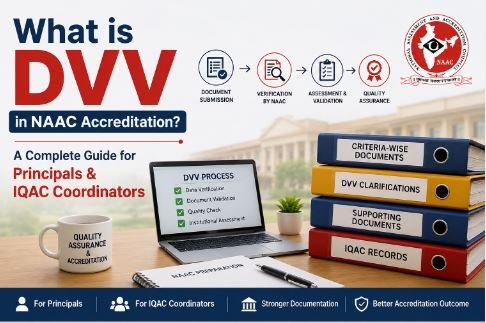
What is DVV in NAAC Accreditation? A Complete Guide for Principals & IQAC Coordinators

NAAC Qualitative Metrics vs Quantitative Metrics

2 thoughts on “How Students Benefit from NAAC Accredited Colleges”